
Loop

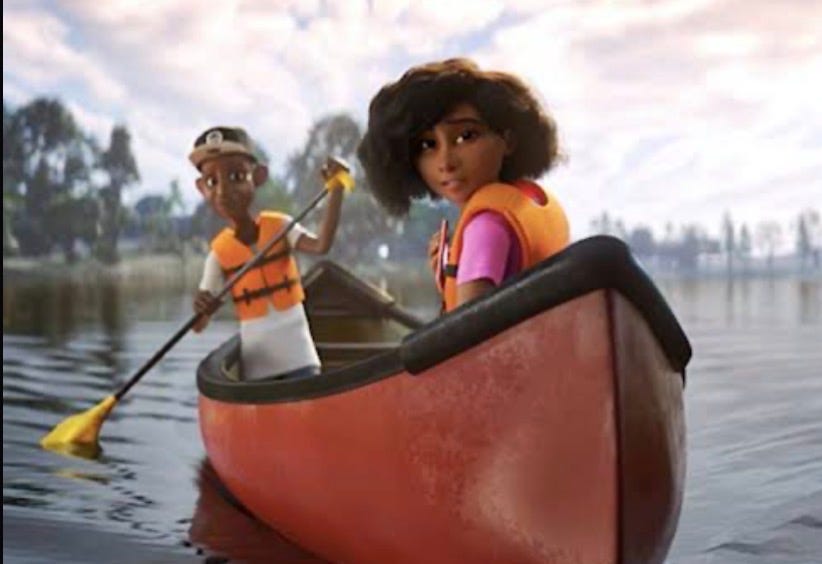
Erica Milsom’s nine-minute animated short Loop opens with a brief introduction from the director, which tells us what to expect from the film.
The story follows Marcus(Christiano Delgado), a talkative boy who is paired with Renee(Madison Bandy), a nonverbal autistic girl, for a canoe trip on a camp lake. From the start, Marcus is uncomfortable with the assignment. He looks at Renee and assumes it will be difficult to connect with her because she does not speak. His first instinct is avoidance, and he would rather not be responsible for her. Renee, however, is observant and communicates in her own way through gestures and her phone.
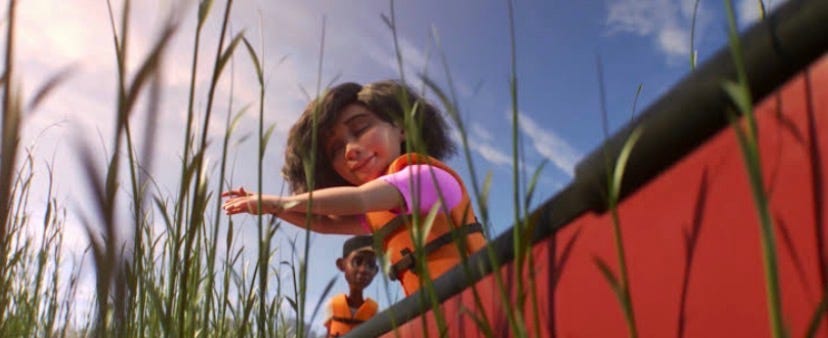
Through the trip, he gets a firsthand experience of how hard it is to communicate with someone who clearly knows what they want, but isn’t able to communicate it. Renee tries to tell Marcus something, but he doesn’t understand, which leads to both of them becoming frustrated. However, Renee is finally able to communicate through emoji on her phone that she wants to row by the restrooms. Marcus takes her there, thinking she wanted to use the restrooms, but it soon becomes clear that her intention is simple and sensory: she wants to feel the grass growing through the shallow water.
However, the situation changes when Marcus misinterprets her reactions. Thinking he is being helpful, he brings her into a tunnel to amplify a sound she seemed to enjoy, but what he does not know is that Renee, like many nonverbal autistic individuals, experiences heightened sensitivity to sound. The echo becomes overwhelming, triggering distress and a sensory meltdown that leads to chaos and the canoe crashing. That’s when communication breaks down completely. Renee reacts strongly, throwing her phone and retreating under the canoe, while Marcus is left confused and confronted with the consequences of his misunderstanding.
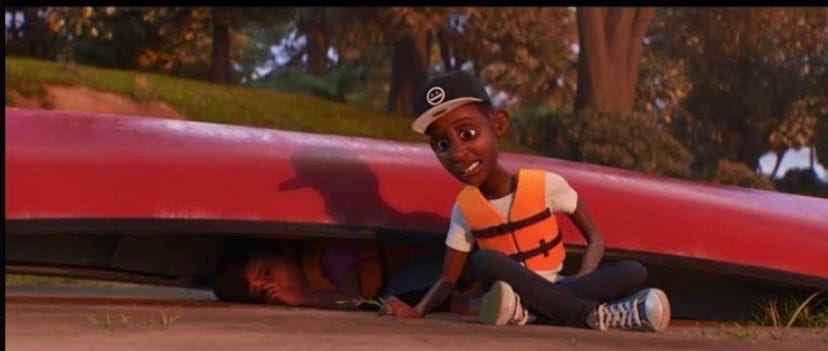
Eventually, Renee slowly regains her calm, and Marcus, now more aware and careful, approaches her differently. He offers her blades of grass, the same thing she had enjoyed earlier near the water. This simple gesture becomes a form of understanding between them. Renee accepts it, and trust begins to form.
By the end, Marcus’s frustration is replaced with patience, and he now understands Renee and learns how to meet her halfway.
Loop is a beautifully told story that reminds us of the importance of having a willingness to understand another person’s way of experiencing the world. A must watch.
Film Fact
Renee is voiced by Madison Bandy, a non-speaking autistic actress, which helps the film reflect more authentic and lived autistic experience rather than imitation.
Autism Overview
Autism Spectrum Disorder (ASD) is a neurodevelopmental condition that affects how a person communicates, interacts socially, and processes sensory information. It is described as a spectrumbecause it appears differently in each individual, with varying strengths and support needs.
According to the World Health Organization(WHO) autism fact sheet, autism typically begins in early childhood and is characterized by differences in social communication, restricted interests, and repetitive behaviours. The WHO also notes that autistic people may experience the world differently, especially in terms of sensory input and interaction with others.
The Centers for Disease Control and Prevention (CDC) overview of autism explains that autism is considered a developmental disability because it affects brain development and can influence learning, behaviour, and communication skills. However, it is important to understand that autism is not an illness or something that needs to be “cured,” but rather a different way of experiencing and interacting with the world.
And just like in Loop, autistic individuals simply want to be understood, respected, and met with patience and acceptance in the way they experience the world